Student work
Not just what we taught. What they made.
Every program is designed to produce something. A document, a recording, an argument delivered on the record. These are the categories of work students have produced.
Policy proposal
The Legacy Business Framework. Fellows researched and drafted a framework to protect long standing local businesses in Miami-Dade, then presented it to the Board of County Commissioners. The cohort went to County Hall to offer a solution rather than to ask permission.
Legislative advocacy
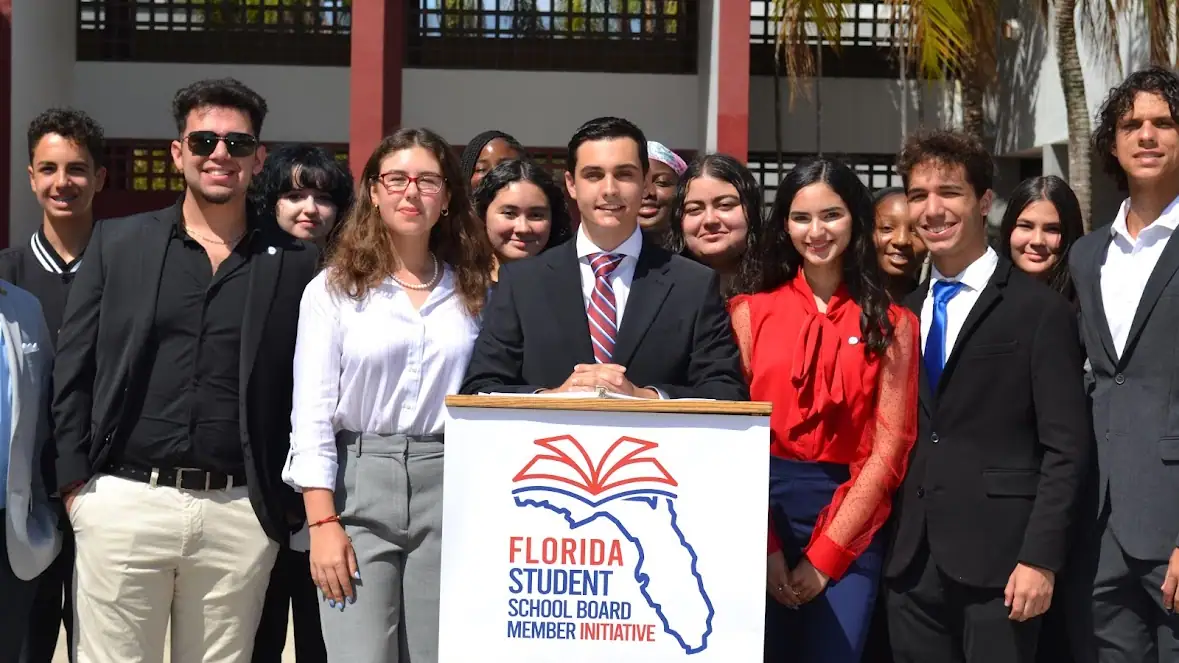
Student representation on Florida school boards. Students built the case that every district should seat a student advisor, carried it from campus outreach to the state legislature, and argued it in front of elected officials.
Public comment
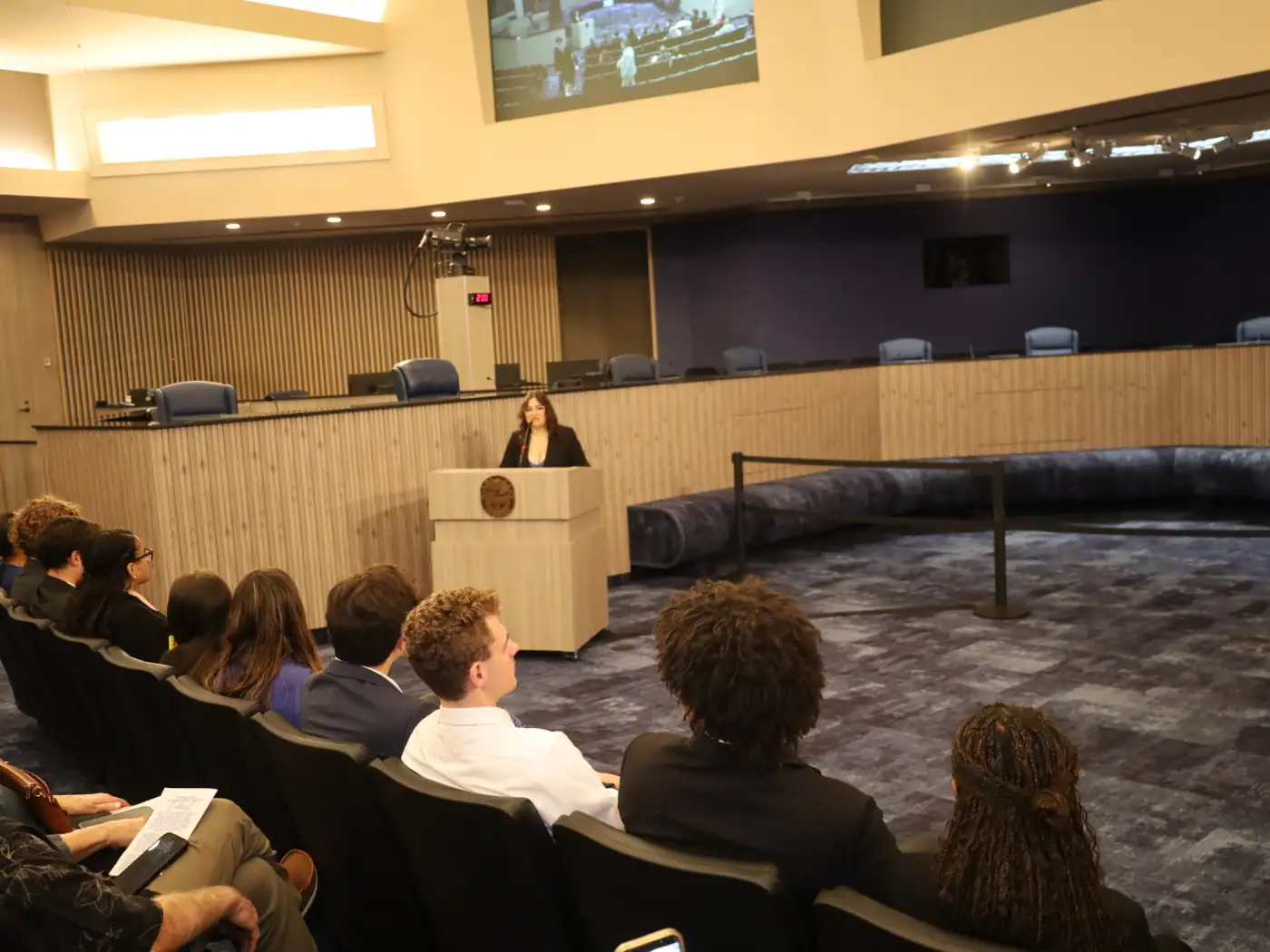
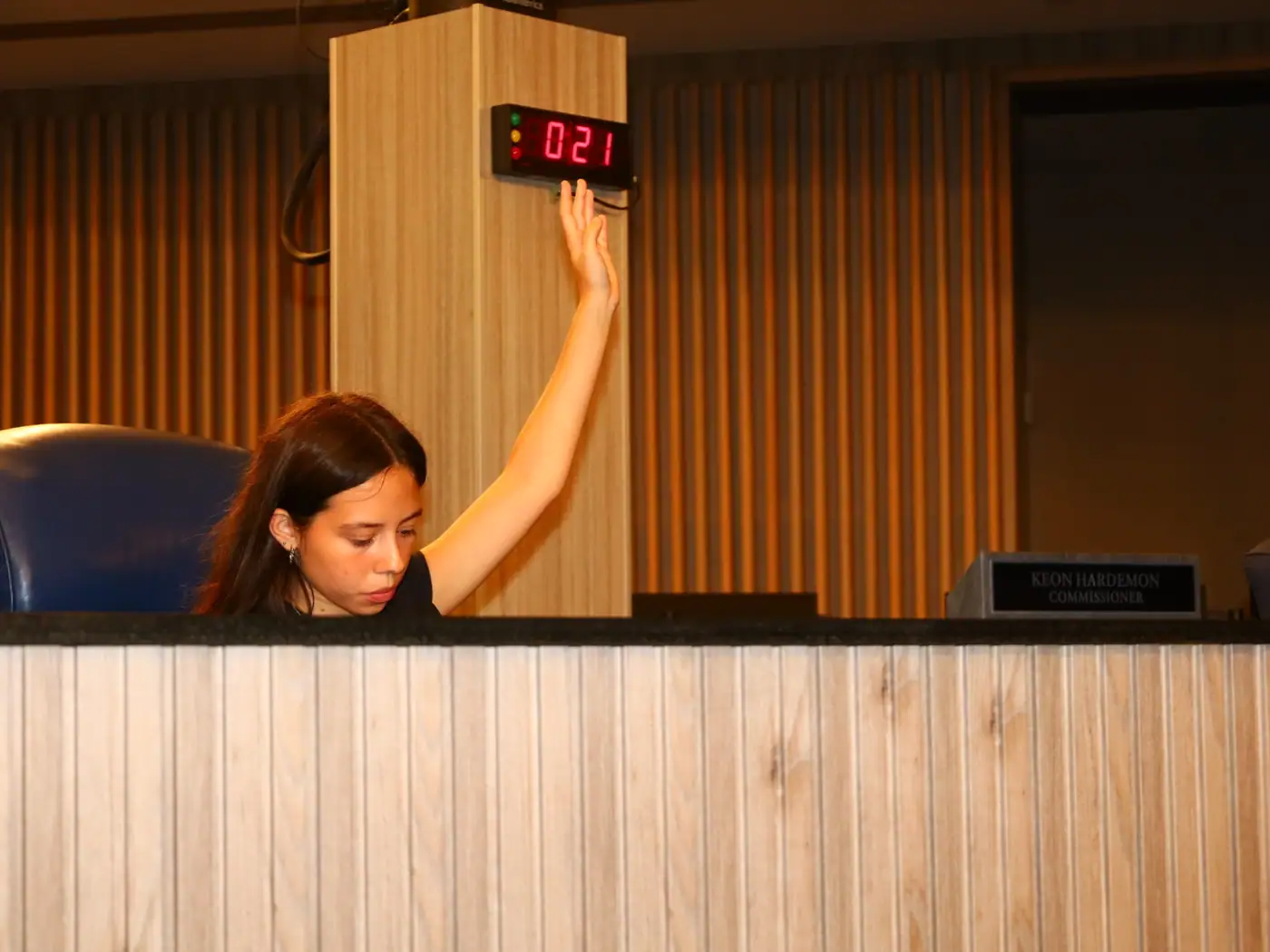
Prepared remarks delivered at municipal meetings, on the agenda, within the time limit and into the public record.
Business pitch
Economic proposals developed through research, budgeting and financial modeling, then pitched to judges, partners and media. Watch the fellows present (opens in a new tab)
Civic media
Podcast episodes researched, hosted and published by students, with guests including a district superintendent, a school board member, a college president and the chief executive of a major children's foundation.
Journalism
Reporting and policy writing developed inside a working newsroom, then applied to community issues students identified themselves.
Community project
A two hundred dollar microgrant turned into Blissful Hands (opens in a new tab), a student founded initiative serving a shelter, an elementary school, a daycare, a hospital neonatal unit and a senior center.
Artistic statement
Poetry, music, movement, film and visual art made to put a public concern in front of an audience that does not attend government meetings.
Why this matters
Students are producers, not attendees.
A photograph of a full auditorium proves that people showed up. A drafted policy framework presented to county commissioners proves something harder to fake.
Students write, speak, interview, host, research, facilitate, pitch and lead. Every program is built to end with something tangible that has a student's name on it.
One person opens a door. The next person holds it.How the organization describes its own succession
A mentor opens a door for a student. That student runs a program and opens a door for a younger one. Program managers become officers. Officers graduate and return to the board.
The organization is designed so that the chain does not depend on any one person staying.